
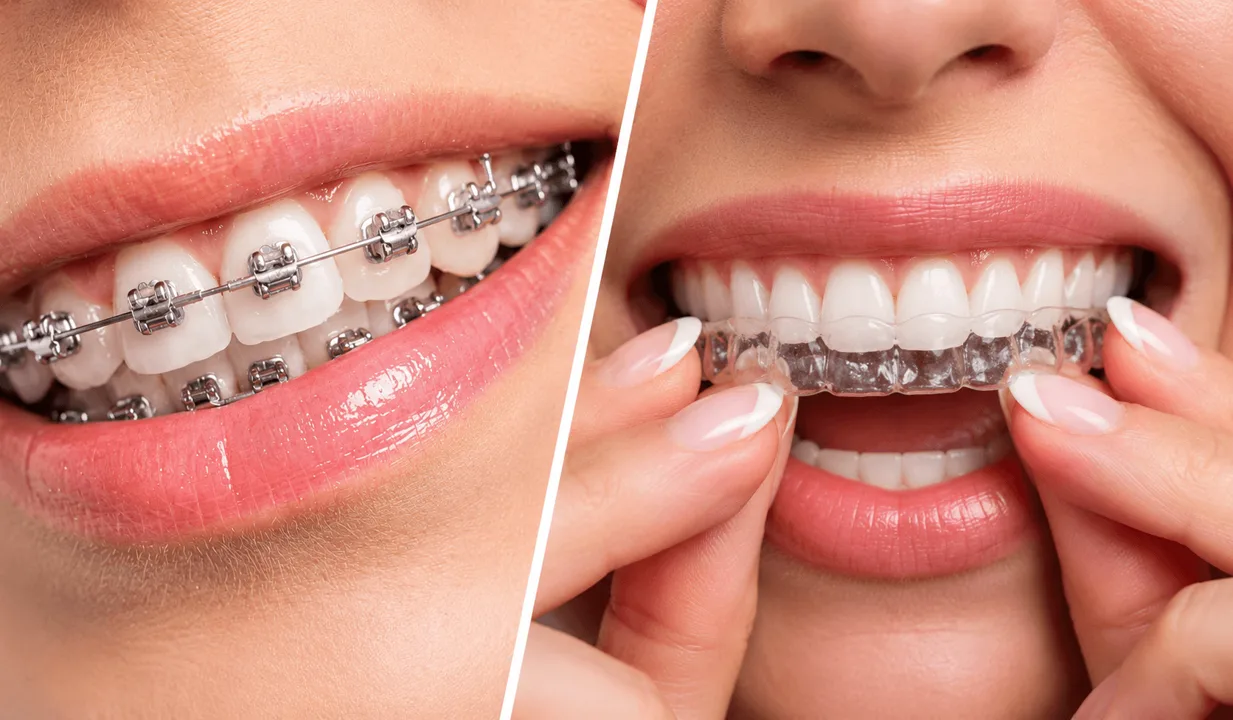
If you are considering orthodontic treatment, two of the most common options are Invisalign clear aligners and traditional dental braces. Both are treatments for straightening teeth and correcting bite concerns, and both are available at My Dentist Geelong (Highton). The key question is which option is better suited to your teeth, lifestyle, treatment goals and budget.
While a 2024 systematic review found that Invisalign can move teeth as effectively as braces for many cases, it also noted that treatment outcomes can vary depending on case complexity, which is why the most suitable option depends on each patient’s individual needs.
The right choice depends on several factors, including the complexity of your orthodontic concerns, how discreet you would like your treatment to be, whether you can commit to wearing removable aligners as directed, and the cost of treatment.
This article compares Invisalign and braces, including how each treatment works, who they may suit and what to expect during treatment. Whether you are an adult looking for a discreet orthodontic option or a parent researching treatment for your teenager, this article can help you prepare for an informed discussion with your dentist.
How Does Each Treatment Work?
How Does Invisalign Work?
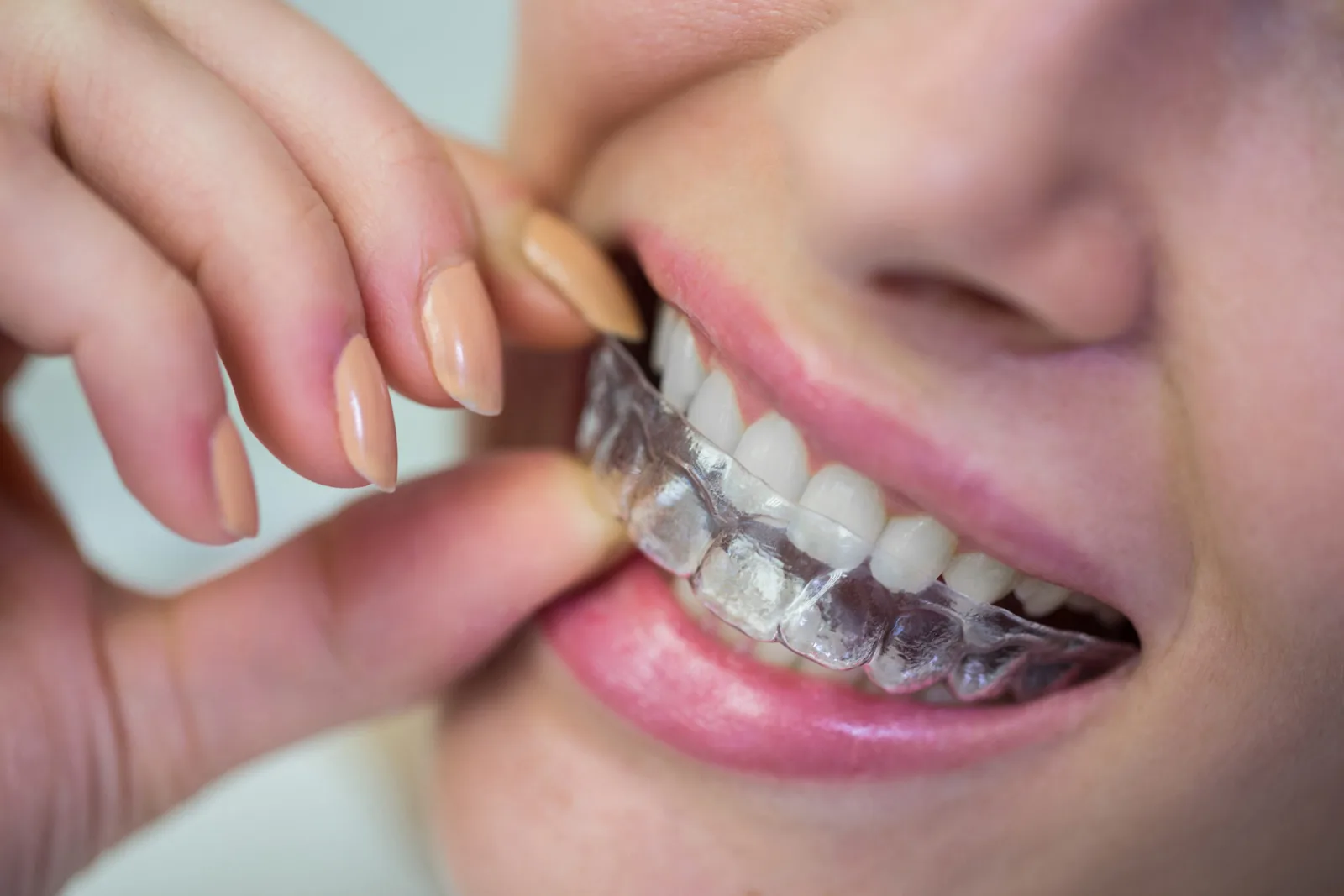
Invisalign treatment uses a series of custom-made, clear and removable aligners to gradually move your teeth into the correct position. Treatment begins with a digital scan of your teeth, which is used to create a personalised treatment plan and map out each stage of tooth movement.
Each set of aligners is shaped slightly differently, applying gentle, controlled pressure to selected teeth. You will usually change to a new set of aligners every one to two weeks, allowing your teeth to move progressively throughout treatment.
The aligners are made from a flexible, medical-grade thermoplastic material designed to fit closely over the teeth. In some cases, small tooth-coloured attachments, known as SmartForce attachments, may be bonded to certain teeth. These help the aligners grip the teeth and achieve more precise or complex movements.
For treatment to work effectively, the aligners generally need to be worn for 20 to 22 hours each day. They should only be removed when eating, drinking anything other than water, brushing and flossing.
How Do Traditional Braces Work?
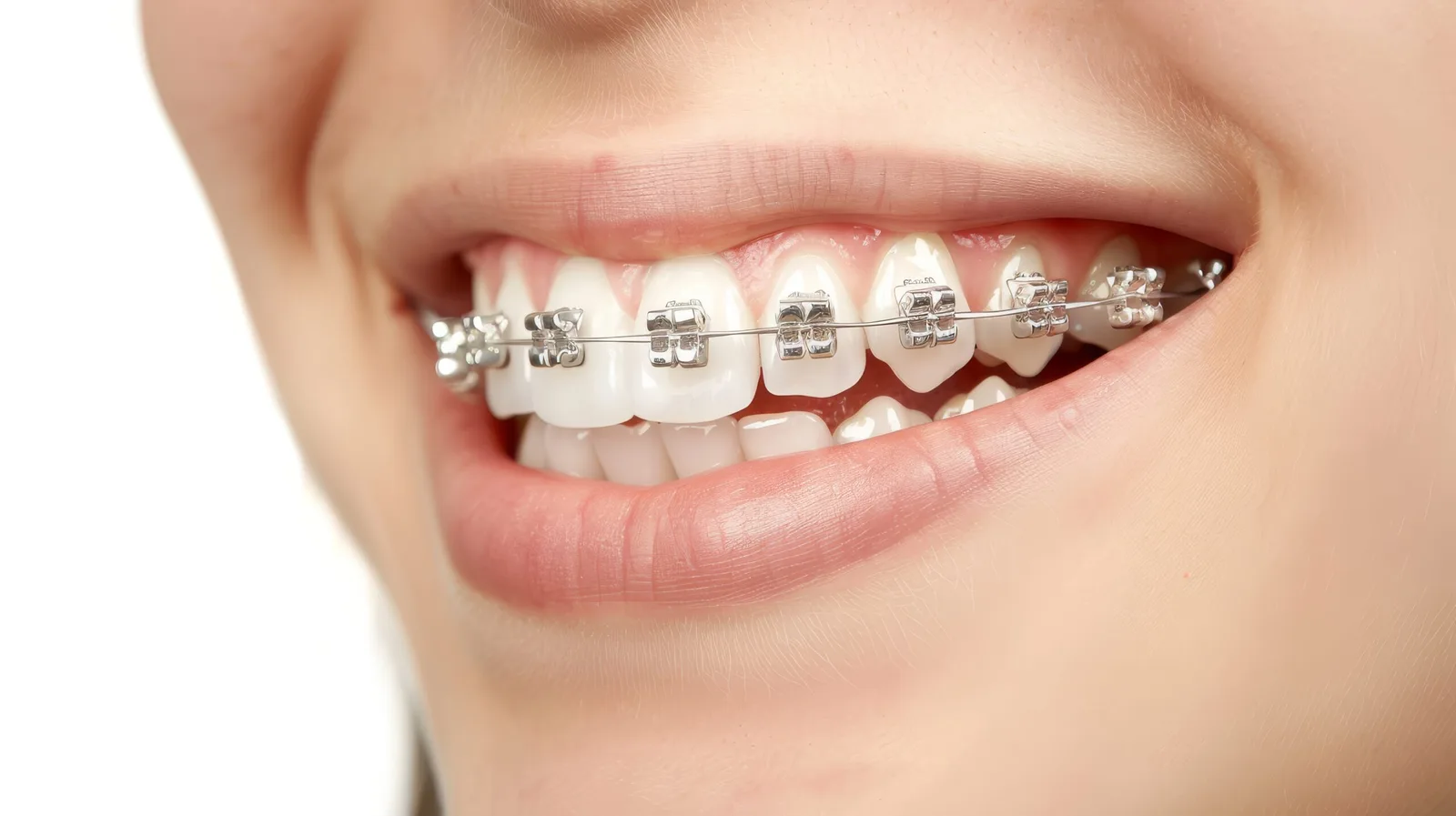
Traditional braces use small metal brackets bonded to the front of the teeth. A thin archwire runs through the brackets and is usually held in place with small elastic ligatures. The archwire applies steady pressure, gradually guiding the teeth towards their correct positions.
During regular appointments, the wire may be adjusted or replaced to continue directing tooth movement. As the teeth shift, the surrounding bone gradually remodels. Bone is resorbed on one side of the tooth and formed on the other, allowing the tooth to move and become supported in its new position.
Unlike Invisalign, braces remain fixed to the teeth throughout the treatment. This means they work continuously and do not rely on the patient remembering to wear an appliance for a set number of hours each day. For patients who prefer a less noticeable option, ceramic (tooth-coloured) brackets are available as an alternative to standard metal brackets and work in the same way.
Comparison between Invisalign and Braces
| Factors | Invisalign | Traditional Braces |
|---|---|---|
| Appearance | Nearly invisible | Visible |
| Removable | Yes | No |
| Best suited for | Mild to moderate cases | Mild to complex cases |
| Eating restrictions | None; remove aligners before eating | Avoid hard and sticky foods |
| Oral hygiene | Brush and floss as normal | Requires extra care around brackets |
| Treatment duration | 6 – 18 months | 12 – 24 months |
| Patient compliance | High (20–22 hrs/day wear) | Low — fixed in place |
| Retainer needed | Yes | Yes |
Which Treatment Is Right for Your Situation?
Both Invisalign and dental braces are clinically effective orthodontic treatments, but they perform differently depending on the complexity of the case and what needs to be corrected.
Understanding where each option may work best can help you approach your consultation with a clearer idea of what to expect.
Dental braces are generally the stronger choice for patients who:
- Require more complex bite correction. Braces may provide greater control when treating certain overbites, underbites, crossbites, open bites or other complex orthodontic concerns.
- Have severe crowding or significantly rotated teeth that require a higher and more consistent level of force throughout treatment.
- Are younger teenagers, who find it difficult to wear a removable appliance consistently. Because dental braces are fixed in place, treatment continues regardless of compliance.
- Prefer a treatment that works continuously. Braces remain active throughout the day and night, although patients still need to follow instructions regarding cleaning, food choices and appointments.
Invisalign may be suitable for patients who:
- Have mild to moderate crowding or spacing. Research comparing clear aligners with traditional braces has found that aligners can be effective for mild crowding and movements involving the front teeth.
- Are adults or older teenagers who can reliably wear their aligners for 20 to 22 hours per day. Consistent wear is the most important factor in whether Invisalign achieves the planned result.
- Prefer a discreet orthodontic treatment. The clear aligners are less noticeable than metal brackets and wires during daily activities.
- Play contact sports or a wind instrument, as fixed brackets and wires may cause discomfort or practical difficulties.
- Want to remove their appliance when eating, cleaning, or on special occasions.
In some complex cases, a dentist may recommend using both treatments at different stages. For example, braces may be used for the initial tooth movements, followed by clear aligners to refine the final position.
The most appropriate option can only be determined after an assessment of your teeth, gums and bite. A consultation at My Dentist Geelong (Highton) allows your dentist to discuss your concerns, evaluate your orthodontic needs and recommend a treatment plan suited to your lifestyle and goals.
Comfort, Eating, and Oral Hygiene

Comfort During Treatment
Some discomfort is normal with both Invisalign and dental braces, particularly when treatment begins or when the appliance is adjusted. With braces, patients may experience soreness after the initial fitting and following adjustment appointments, as the archwire continues to guide the teeth into their planned positions. The brackets and wires may also irritate the inside of the cheeks or lips, especially during the first few weeks. Orthodontic wax can often be applied over the brackets to help reduce this irritation. With Invisalign, patients commonly experience pressure or tightness when changing to a new set of aligners. This usually occurs because the aligners are applying controlled force to move the teeth into the next stage of treatment. A clinical study comparing pain levels during orthodontic treatment suggests that discomfort may vary between clear aligners and fixed braces at different stages. However, both treatments generally require an initial period of adjustment.
Eating and Drinking
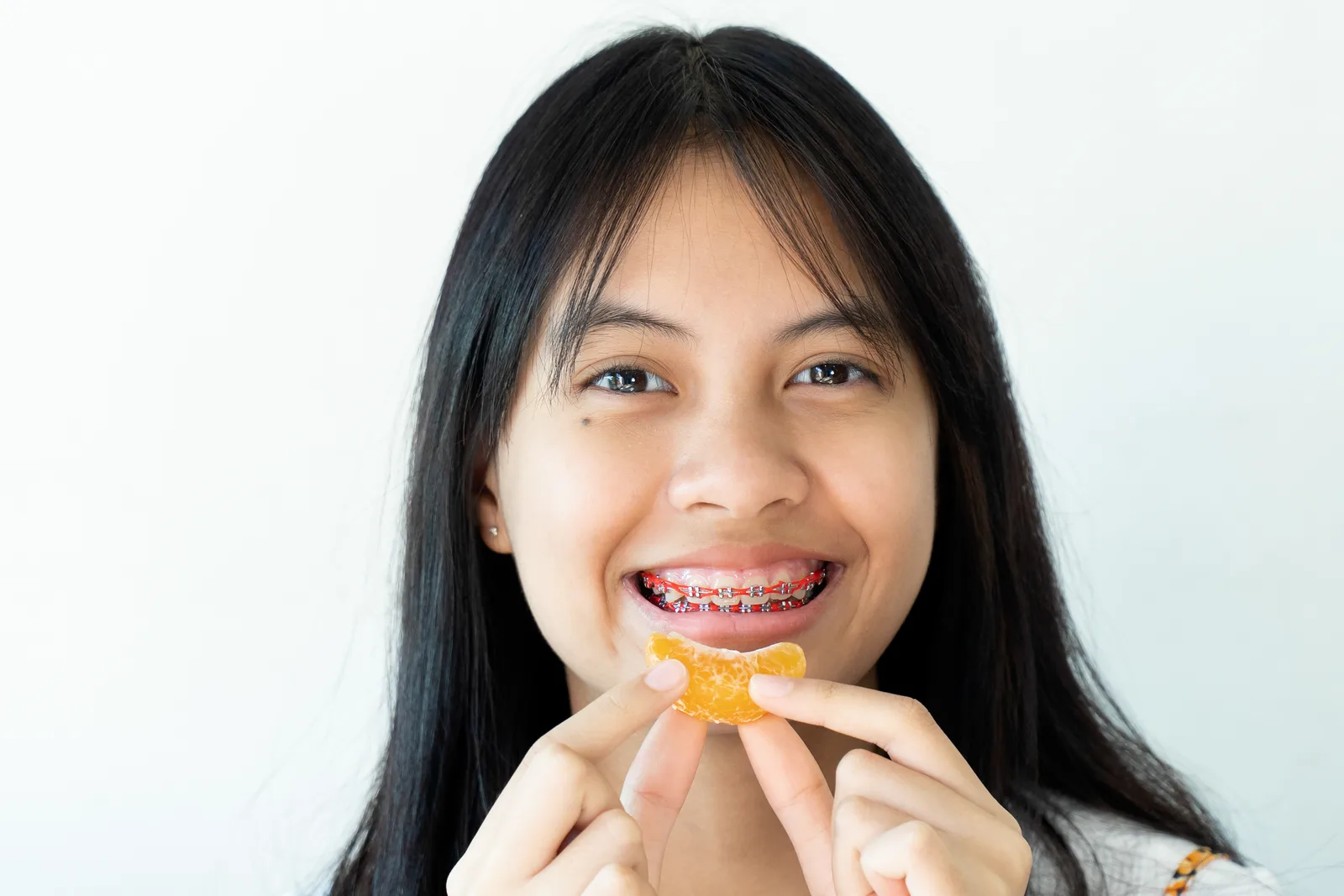
Eating is one of the main practical differences between Invisalign and braces. Invisalign aligners must be removed before eating or drinking anything other than water. As the aligners are removable, there are generally no food restrictions during treatment. However, you should brush your teeth or rinse your mouth before reinserting them to help prevent food particles and bacteria from becoming trapped against the teeth. With dental braces, certain foods should be avoided because they may damage the brackets or bend the archwire. These commonly include hard, sticky or chewy foods such as popcorn, chewing gum, hard lollies and crusty bread. Patients may also need to cut firmer foods into smaller pieces before eating them. These restrictions may be worth considering when choosing between Invisalign and braces, particularly for teenagers or patients whose usual diet includes these foods.
Oral Hygiene
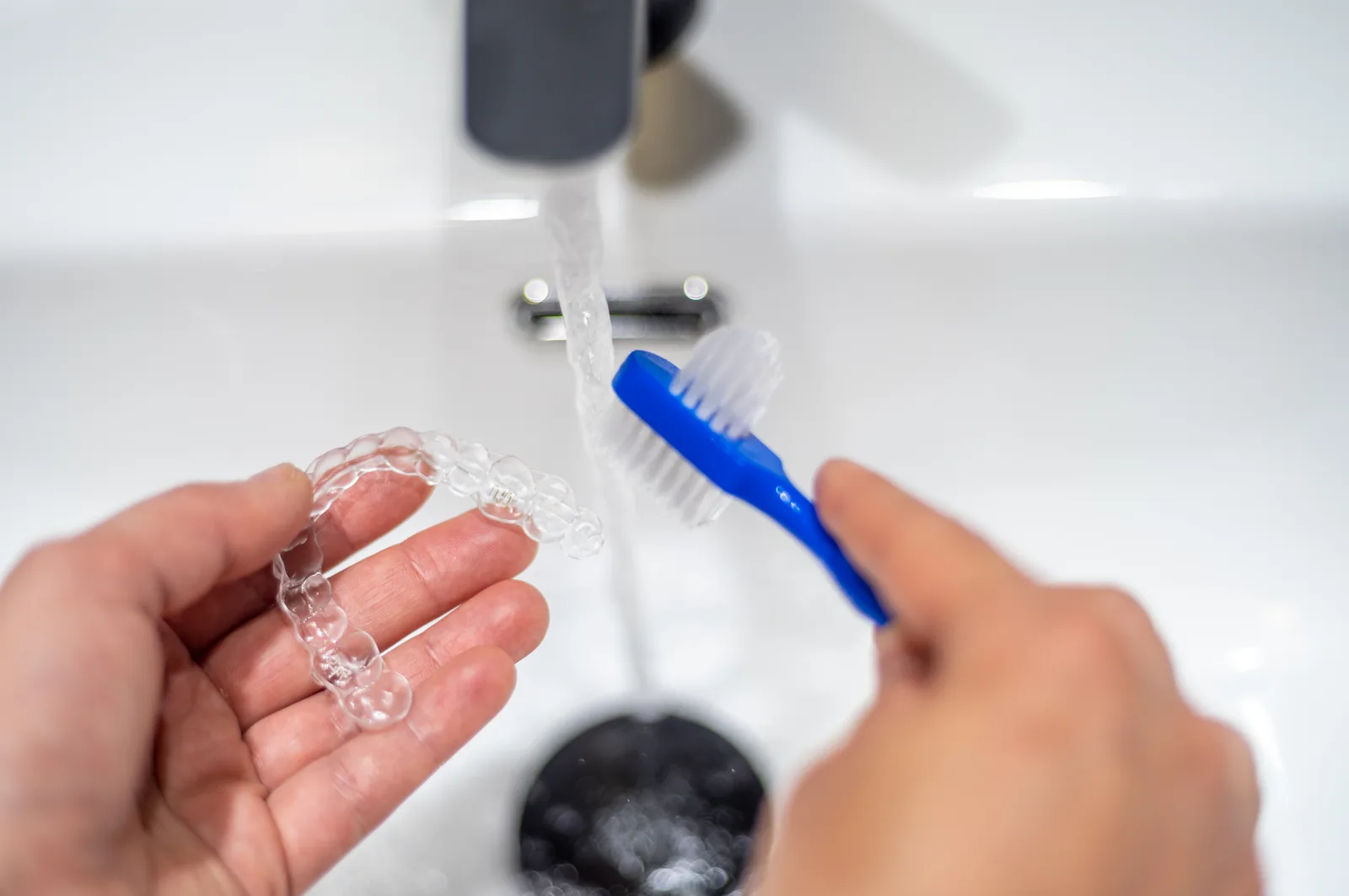
Maintaining good oral hygiene is important throughout any orthodontic treatment, although cleaning around braces generally requires additional care. Brackets and wires create extra surfaces where food particles and plaque can collect. Patients may need to use interdental brushes, floss threaders or other specialised cleaning tools to reach around the appliance effectively. Without consistent cleaning, plaque accumulation may increase the risk of gum inflammation, tooth decay and enamel damage. With Invisalign, the aligners can be removed so you can brush and floss your teeth as usual. This may make daily oral hygiene more manageable, but the aligners must also be cleaned regularly before being placed back over the teeth. A 2025 study has found that removable aligners may offer advantages for oral hygiene and gum health compared with fixed appliances. However, good results still depend on consistent brushing, flossing and professional dental care, regardless of which orthodontic treatment you choose.
Why Choose My Dentist Geelong (Highton)
At My Dentist Geelong (Highton), we offer both Invisalign clear aligners and dental braces, allowing your treatment options to be considered based on your individual needs. Our team carefully assesses your teeth, bite, treatment goals and lifestyle before recommending a suitable orthodontic pathway.
Our dental clinic is conveniently located at Barrabool Hills Plaza in Highton, with ample free parking available. We serve patients from Highton and surrounding Geelong areas seeking orthodontic treatment in a comfortable and familiar dental setting. Flexible payment options, including DentiCare and government dental benefits, are also available to support your care.
If you are comparing Invisalign and braces and are unsure which option may suit you, book a consultation with our team. We can assess your orthodontic needs, explain the available treatments and help you make an informed decision about your smile.